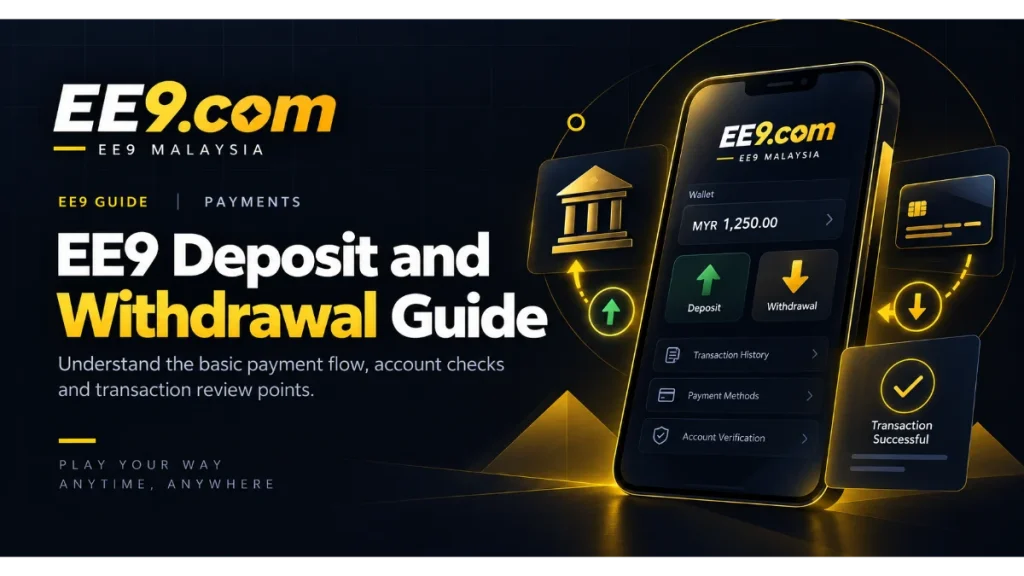
Deposit and withdrawal options should be checked inside the current EE9 account interface, because availability, limits, instructions, and processing steps can vary. This guide explains how to approach a transaction carefully without promising a particular method or completion time. The essential habit is to read what is shown before confirming and keep a clear record of the result.
Payment options shown through the EE9 platform can vary by account and current availability.
Review the current transaction page first
Begin with the EE9 deposit and withdrawal page, then sign in through the official account route when required. The options visible in your account are the relevant choices at that moment. Do not rely on a payment list copied from an old article or shared by another user.
Read the name of the transaction type, any amount fields, displayed limits, fees, account requirements, and instructions. These details may differ between options and can be updated. If something is unclear, pause before entering financial information.
Preparing to make a deposit
Use an account and payment arrangement you are authorised to use. Check that the name and details you provide are accurate and consistent with the instructions on screen. Choose an amount based on your own entertainment budget, not on pressure to recover a loss or unlock an offer.
Enter the amount once and review it carefully, paying attention to decimal places and currency display. Follow the steps in the EE9 interface and the authorised payment screen. Do not send money to a destination supplied only through an unsolicited private message, even if the sender claims that the normal route is unavailable.
If you are considering an offer, visit the EE9 promotions page and read the current terms before depositing. A headline does not explain eligibility, validity, game rules, or other conditions. Decide whether the offer suits you only after understanding those terms.
Checking the deposit result
After completing the external or on-screen step, return to the EE9 account and look for a transaction record or balance update. Keep any non-sensitive reference shown by your payment service. Do not submit the same deposit again merely because the first screen takes longer than expected; confirm its status first.
If the account shows a pending or unsuccessful state, follow the current instruction attached to that status. Timing can depend on the option and circumstances, so avoid assuming that every deposit is immediate. A screenshot of the status may help later, provided it does not expose complete bank, wallet, card, or account credentials.
Preparing a withdrawal request
Open the withdrawal section while signed in through the verified EE9 account route. Review the options currently offered to your account and select one you control. Check the displayed amount rules and any account action requested before confirming.
Enter the destination details carefully. A typo can delay or misdirect a transaction, and some details may not be editable after submission. Do not allow another person to provide a destination on your behalf. If the screen requests an unfamiliar step, use official support to clarify it before proceeding.
Once submitted, record the amount, date, visible status, and any reference. Processing time can vary, and the account display is the best source for the current state. Avoid cancelling and resubmitting repeatedly unless the interface or support specifically instructs you to do so.
When a transaction needs checking
Compare the EE9 status with the record from your own payment service. Make sure you are looking at the correct transaction and date. If a deposit appears outside EE9 but not inside the account, or a withdrawal remains in an unexpected state, gather the safe references from both sides.
Contact EE9 support through the current route and explain the transaction type, approximate time, amount, visible status, and reference when safe to share. Mask financial identifiers in screenshots and never send a password, one-time code, full card number, PIN, or online-banking credentials.
Keep payment decisions controlled
- Check current methods and instructions inside your own EE9 account.
- Use only payment arrangements you are authorised to use.
- Review amounts and destination details before confirmation.
- Keep references and wait for a clear status before retrying.
- Treat deposits as entertainment spending and do not chase losses.
Separate transaction records from passwords and secret payment details. A simple note containing the date, amount, option name, and non-sensitive reference is usually enough for your own tracking. Store screenshots in a protected location and remove them when they are no longer useful.
If another person claims that a special payment route will speed up a request, compare that claim with the instructions in your account. Do not move the conversation to an unfamiliar channel or approve a transfer that the verified EE9 interface does not explain. Urgency should trigger more checking, not less.
Also distinguish a payment status from a game result or promotional balance. These may be presented in different areas of an account and should not be assumed to mean the same thing. Read the label attached to each figure before describing a discrepancy to support.
Finish by signing out when the transaction was handled on a shared device. Close any payment-service tab and check that no receipt containing sensitive information was left in a public download folder. Basic session hygiene matters as much as entering the details correctly.
A transaction guide cannot replace the information displayed for a specific account. Use this process as a safety framework: verify the route, read the current terms, submit accurate details once, and keep a record. That makes both routine checks and support conversations much easier.